
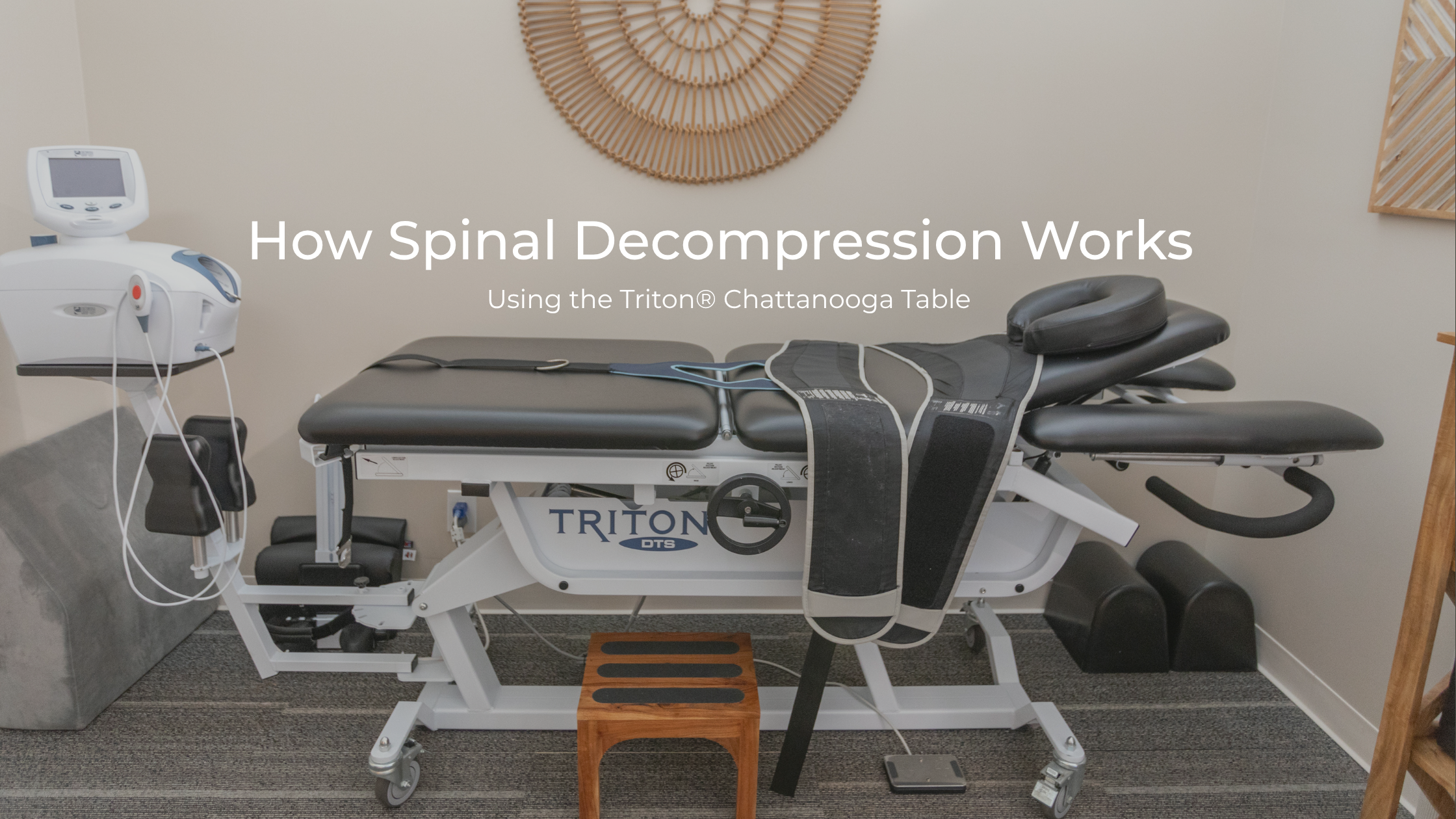
How Spinal Decompression Works
Using the Triton® Chattanooga Table
A closer look at how decompression gently reduces pressure, supports disc health, and helps your body heal naturally.
What’s Happening Inside the Disc During Decompression
Discs in your spine act like cushions between the bones, helping absorb movement and protect nearby nerves.
Over time, stress, posture, or injury can cause these discs to become compressed. When that happens, they may begin to bulge, lose hydration, or place pressure on surrounding nerves leading to pain, stiffness, or symptoms like sciatica.
Spinal decompression works by gently creating space within the spine.
Using the Triton® table, we apply a controlled stretch that produces what’s known as negative pressure inside the disc.
This is where the real change begins.
Think of a spinal disc like a sponge.
When a sponge is compressed, everything is pushed out it becomes flattened, dry, and less able to do its job.
But when that pressure is gently released, the sponge can expand again, drawing water and nutrients back in.
Your spinal discs work in a very similar way.
When decompression creates that negative pressure, it helps:
Reduce pressure on irritated nerves
Create space within the disc
Support the movement of fluids, oxygen, and nutrients back into the disc
Unlike many other tissues, spinal discs don’t have a direct blood supply. They rely on movement and pressure changes to receive the nutrients they need.
This gentle process helps restore that natural exchange creating an environment where healing can begin.
Compression vs. decompression, creating space for healingSupported by Research
Research has shown that spinal decompression can create a measurable reduction in intradiscal pressure, which may help facilitate rehydration and improved nutrient exchange within the disc.
Additional studies have observed changes in disc structure and symptom improvement over time, suggesting that consistent decompression care may support both function and recovery.
Basic Traction / Inversion
Relies on body weight
Less controlled
General pull
Limited targeting
Triton Decompression
Precise targeting
Controlled and consistent
Customized for your condition
Designed for comfort and safety
Why Decompression Is Done Over a Series of Visits
Spinal decompression is not a one-time fix, and it’s not meant to be.
Because discs rely on pressure changes to receive nutrients and support healing, the process needs to happen gradually and consistently over time.
Each session builds on the last.
Think of it less like a quick correction, and more like gently retraining the environment your disc is living in.
With repeated sessions, we’re working to:
Reduce pressure on the disc and surrounding nerves
Improve hydration within the disc
Support nutrient exchange and healing
Restore more normal movement over time
This is why care is typically recommended as a series, not because more visits are needed for the sake of it, but because healing takes consistency.
Many patients begin to notice changes along the way, but the goal is not just short-term relief, it’s helping the body create more lasting improvement.
We’re not forcing change.
We’re creating the conditions for it, one step at a time.